
ADELAT analyzes challenges and benefits of liberalizing the retail electricity market in Latin America
The Association of Latin American Electric Power Distributors (ADELAT) launched the DSO brief “Retail Market Liberalization in Latin America: New Scenarios for Electricity Distribution.”
The liberalization of retail electricity markets entails a significant transformation of the electricity sector, redefining the roles of key stakeholders and generating a more complex and challenging operating environment. This new document aims to explore the situation of Latin American energy distributors, assessing the regulatory, operational, and competitive impacts of a potential liberalization. It also explores international experiences and the strategies implemented to ensure an orderly transition.
The main findingsof this work were presented during a webinar, held on June 26 as part of the Adelat Expert Voice series, where experts and leaders shared their insights on this crucial topic.
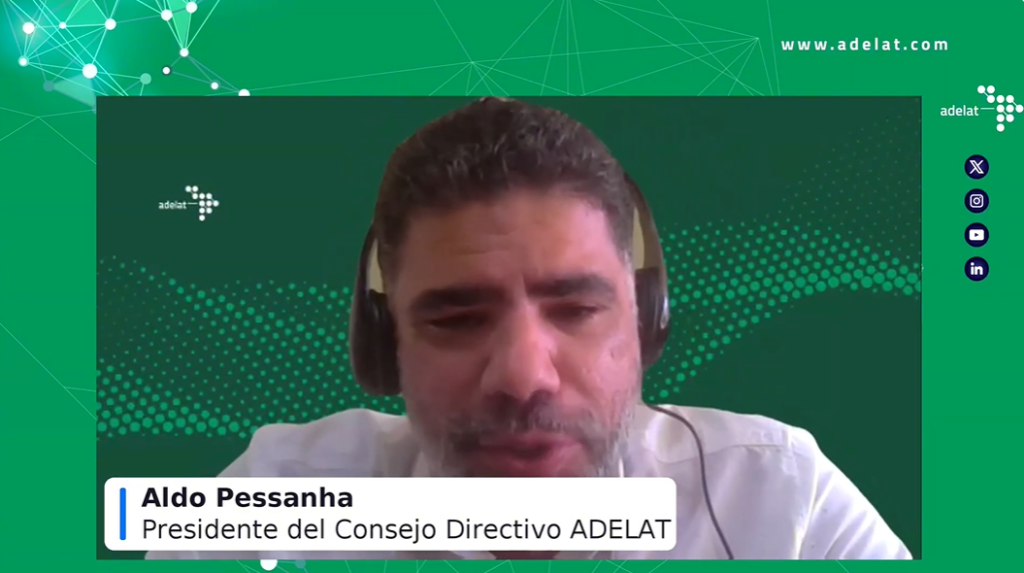
At the meeting, ADELAT’s Board President, Aldo Pessanha summarized the current situation in the Brazilian market. He explained that the “free customer” model has been in place since 1995, but is only limited to large consumers. Pessanha expressed optimism regarding the liberalization process following the publication of a provisional measure that must be approved by Congress, and emphasized that the details of a possible liberalization must be discussed to achieve a balanced market opening.
Then, ADELAT’s Executive President, Alessandra Amaral, gave a brief presentation of the Association and introduced Roberto Cajamarca, Director of Knowledge and Strategy, who addressed the main considerations of the study.
Cajamarca highlighted that the main benefit of such a process is the reduction of costs for consumers, but it is necessary to ensure supply security, operational efficiency, and infrastructure adaptation. He also outlined the conditions for reducing the limits on access to the free market, such as a diversity of suppliers, availability of energy in the wholesale market, interoperable information systems, and robust regulation and supervision.
Katia Rocha, Public Policy Analyst at the Institute for Applied Economic Research (IPEA), linked to the Brazilian government, analyzed the country context and the three cornerstones of the provisional measure referenced by Pessanha: opening the market to residential and small businesses customers; a new tariff structure for low-income users; and rationalization and redistribution of subsidies.
Juan Pablo Marzocca, partner at GME and Utility Business Modeling Leader, discussed the situation in Argentina and the impact of the approval of the 2024 Bases Law on the possibility of liberalizing and decentralizing retail energy market. Marzocca emphasized the government’s clear intention in moving toward a free retail system, but asserted the need to adjust the tariff structure to disaggregate distribution and marketing costs.
Emili Rousaud Parés, founder and CEO of Grupo Factor Energía, analyzed the Spanish experience with market liberalization. He stated that it was a gradual opening process that demonstrated that competition is the best mechanism for optimizing price and service quality. He also emphasized the importance of consumer education and the deploymentof smart meters to achieve positive results.
Sebastián Novoa, president of the Ibero-American Association of Energy Traders (AICE) and vice president of the Chilean Association of Energy Traders (ACEN), offered his perspective on the situation in various countries in the region, such as Brazil and Argentina, and deepened into the Chilean case.
Finally, Fernando Barrera Rey, founder and CEO of Barrera Rey and an expert in energy market regulation and competition, explained the Colombian context, where the wholesale market was liberalized more than thirty years ago but retail sales have not yet been opened. In this regard, he praised the Spanish model and advocate for lowering barriers to retail markets.
Retail trade liberalization is a key issue for the future of the electricity sector in Latin America. We trust that this exchange has contributed to building knowledge and understanding of the scenarios, challenges, opportunities, and conditions necessary to advance this process across the region.
*For more information or press releases, write to comunicacion@darkturquoise-zebra-776384.hostingersite.com
*Watch the complete webinar here: https://youtu.be/igSW7xWRXwI
*Download the full DSO at: https://bit.ly/DSOMarkets_EN or the executive summary at: https://bit.ly/DSOMarkets_summary