ADELAT: Unifying Energy Efforts Across Latin America

Q: How does ADELAT promote regional energy integration and facilitate collaboration among electricity distribution companies in Latin America?
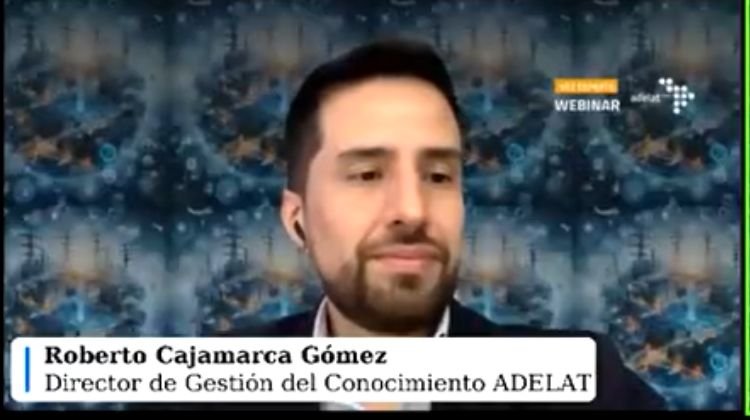
A: ADELAT was created in 2022 with the objective of promoting the key role of energy distributors in the energy transition roadmap in Latin America. We have 19 members from seven countries: Argentina, Brazil, Chile, Colombia, Ecuador, Peru, and Guatemala. We represent 70 million consumer units.
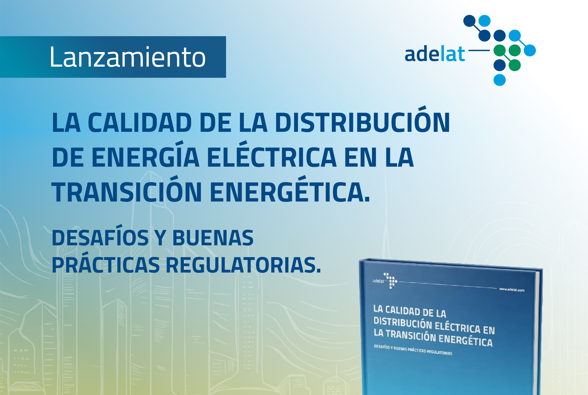
We focus on three main axes. The first is the generation of knowledge, and we have created various resources, including the recently published paper, Regulatory challenges and improvements for electrical distribution in the Latin American energy transition. This paper concluded that the energy transition requires an upgrade of networks for guaranteeing the flexibility, new hosting capacity and bidirectional energy flows management coming as a consequence of new customers behavior in the electrification era, which will demand an unprecedented level of investments especially in digitalization and automation. We also produce “DSO Briefs,” which are documents on specific topics, such as electric mobility, renewal of concessions, resilience, and integration between telecommunications and distribution.
The second axis is including the energy distribution activity into the public agenda of energy transition at institutional level in each country we have presence . The third axis is to build alliances and promote collaboration between partners and multilateral organizations, bringing together leaders and experts to generate synergies gathering forces to consider the distribution network as the platform in which all these plans must work in the near future. We have already signed many agreements for this purpose, aiming to help Latin American distributors work toward the energy transition.
Q: What is the importance of Mexico in this integration process?
A: An important point of our strategy is the exchange of good practices. Despite the differences between countries in terms of the state of electricity matrix technologies, the region has many points in common. One is the growing adoption of renewable energy and the abundance of natural and mineral resources. We plan to use ADELAT as a forum to exchange knowledge and practical experiences.
Mexico has a peculiar composition. For example, Brazil had a large government company called Electrobras, which covered everything from distribution to generation and transmission, which is similar to Mexico’s CFE. There are many experiences the countries can share. Mexico is a fundamental piece for our association. Like Brazil, it is a large country that has a large population, which implies high energy consumption. The country faces various challenges in the implementation of new technologies related to the energy transition, such as EVs, remote measurement, and energy storage. Mexico also faces specific challenges regarding its electricity matrix composition and decarbonization.
Q: What challenges are specific to distributed generation in Mexico?
A: The integration of distributed energy resources, such as solar energy and storage systems, and changing electricity demand cycles and flows make the distribution network much more complex. Therefore, distributors face the challenge of adding new functions, roles, and responsibilities. They stop being simply operators of a distribution network and become large operators, managing a much more complex distribution system that involves the integration of new actors and technologies. This means they need more flexibility to coordinate bidirectional energy flows and take full advantage of the flexibility offered by new players.
Q: What are the biggest challenges faced by electricity distributors in Latin America?
A: In terms of financing, we are seeing the implementation of new technologies for automation and real-time measurement, which impacts both operating costs (OPEX) and capital expenditures (CAPEX). It is crucial to understand how much is being invested and its potential return in economic and social terms. The paradigm shift from minimizing costs to maximizing benefits for society is fundamental.
Resilience is also important. The market faces significant challenges, such as the introduction of new technologies that decentralize the network. We are also dealing with the climate crisis and concerns about greenhouse gas emissions. Extreme weather events are becoming more frequent and intense, and less predictable. In this context, energy distributors play a key role since they must guarantee both the flexibility and resilience of the system.
Q: What are the main trends you identify among energy players in Latin America and Mexico in terms of technological and financial innovations?
A: The consumer is much more active and informed, seeking to not only consume energy but also to generate it. For example, Brazil’s wholesale market is expected to open, which will cover all high voltage needs. The country is also experiencing strong growth in solar and wind energy, which poses a significant challenge due to their intermittent nature. Thus, the distribution network remains crucial.
Batteries are also decreasing in price, but we face challenges such as the implementation of demand response mechanisms, which can improve economic efficiency but require regulatory changes such as flexible rates or hourly rates. We are also exploring the use of new technologies such as AI, augmented reality, and advanced measurement systems. These technologies generate valuable data that can be used to forecast energy consumption and improve workplace safety, among other uses.
Q: What role do consumers play in shaping these trends and how are distributors adapting?
A: We are experiencing a major transformation in the electricity sector driven by a more active, empowered consumer. This implies that the entire chain, from generation to distribution, marketing, regulation, and technological services, must adapt. For example, we can explore changes in regulation, but in a controlled way and through small pilot projects. We must look for new ways to distribute energy that align with the needs and expectations of the general consumer.
Distributors already perform their usual functions and roles, which include metering, distribution network maintenance, and outage management. However, the system is becoming more complex due to the presence of multiple actors and distributed energy resources, as well as the existence of bidirectional energy flows. Distributors face the challenge of coordinating and optimizing all these variables, which requires significant investments.
This occurs in a context in which some consumers are opting for distributed energy generation, which increases the complexity of the system and the need for investments. On the other hand, the implementation of new technologies, such as automated and remote measurement, also implies additional costs for distributors.
Association of Latin American Electricity Distributors (ADELAT) is a nonprofit organization created in 2022 to promote collaboration among energy distributors in the region. It has 19 members from eight countries: Argentina, Brazil, Chile, Colombia, Costa Rica, Ecuador, Peru, and Guatemala.
Fuente: México Business News
https://mexicobusiness.news/energy/news/adelat-unifying-energy-efforts-across-latin-america