ADELAT analyzes challenges and benefits of liberalizing the retail electricity market in Latin America
ADELAT analyzes challenges and benefits of liberalizing the retail electricity market in Latin America

The Association of Latin American Electric Power Distributors (ADELAT) launched the DSO brief “Retail Market Liberalization in Latin America: New Scenarios for Electricity Distribution.”

The liberalization of retail electricity markets entails a significant transformation of the electricity sector, redefining the roles of key stakeholders and generating a more complex and challenging operating environment. This new document aims to explore the situation of Latin American energy distributors, assessing the regulatory, operational, and competitive impacts of a potential liberalization. It also explores international experiences and the strategies implemented to ensure an orderly transition.

The main findingsof this work were presented during a  webinar, held on June 26 as part of the Adelat Expert Voice series, where experts and leaders shared their insights on this crucial topic.

At the meeting, ADELAT’s Board President, Aldo Pessanha summarized the current situation in the Brazilian market. He explained that the “free customer” model has been in place since 1995, but is only limited to large consumers. Pessanha expressed optimism regarding the liberalization process following the publication of a provisional measure that must be approved by Congress, and emphasized that the details of a possible liberalization must be discussed to achieve a balanced market opening.

Then, ADELAT’s Executive President, Alessandra Amaral, gave a brief presentation of the Association and introduced Roberto Cajamarca, Director of Knowledge and Strategy, who addressed the main considerations of the study.

Cajamarca highlighted that the main benefit of such a process is the reduction of costs for consumers, but it is necessary to ensure supply security, operational efficiency, and infrastructure adaptation. He also outlined the conditions for reducing the limits on access to the free market, such as a diversity of suppliers, availability of energy in the wholesale market,  interoperable information systems, and robust regulation and supervision.

Katia Rocha, Public Policy Analyst at the Institute for Applied Economic Research (IPEA), linked to the Brazilian government, analyzed the country context and the three cornerstones of the provisional measure referenced by Pessanha: opening the market to residential and small businesses customers; a new tariff structure for low-income users; and rationalization and redistribution of subsidies.

Juan Pablo Marzocca, partner at GME and Utility Business Modeling Leader, discussed the situation in Argentina and the impact of the approval of the 2024 Bases Law on the possibility of liberalizing and decentralizing retail energy market. Marzocca emphasized the government’s clear intention in moving toward a free retail system, but asserted the need to adjust the tariff structure to disaggregate distribution and marketing costs.

Emili Rousaud Parés, founder and CEO of Grupo Factor Energía, analyzed the Spanish experience with market liberalization. He stated that it was a gradual opening process that demonstrated that competition is the best mechanism for optimizing price and service quality. He also emphasized the importance of consumer education and the deploymentof smart meters to achieve positive results.

Sebastián Novoa, president of the Ibero-American Association of Energy Traders (AICE) and vice president of the Chilean Association of Energy Traders (ACEN), offered his perspective on the situation in various countries in the region, such as Brazil and Argentina, and deepened into the Chilean case.

Finally, Fernando Barrera Rey, founder and CEO of Barrera Rey and an expert in energy market regulation and competition, explained the Colombian context, where the wholesale market was liberalized more than thirty years ago but retail sales have not yet been opened. In this regard, he praised the Spanish model and advocate for lowering barriers to retail markets.

Retail trade liberalization is a key issue for the future of the electricity sector in Latin America. We trust that this exchange has contributed to building knowledge and understanding of the scenarios, challenges, opportunities, and conditions necessary to advance this process across the region.


*For more information or press releases, write to comunicacion@darkturquoise-zebra-776384.hostingersite.com

*Watch the complete webinar here: https://youtu.be/igSW7xWRXwI

*Download the full DSO at: https://bit.ly/DSOMarkets_EN or the executive summary at: https://bit.ly/DSOMarkets_summary

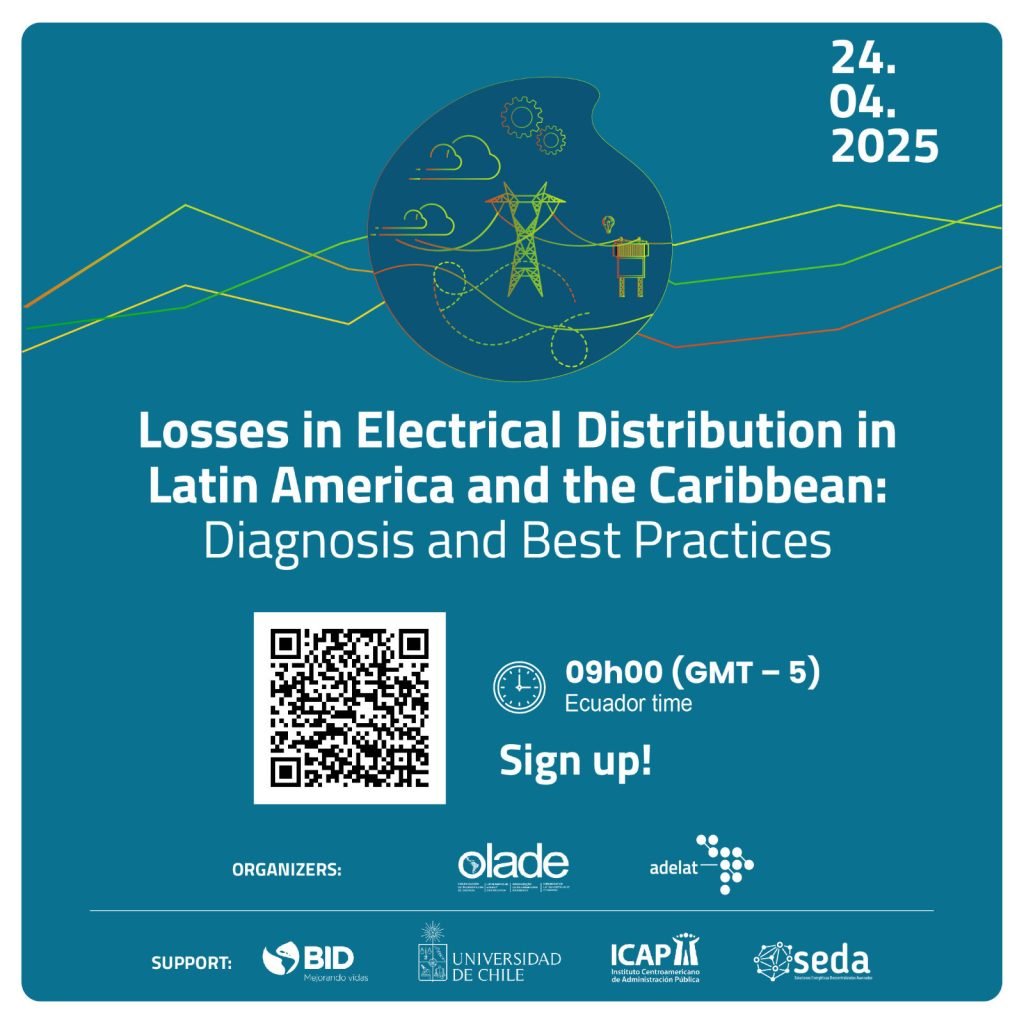
OLADE, ADELAT, and the IDB call a regional webinar to address electricity losses in Latin America and the Caribbean

OLADE, ADELAT, and the IDB call a regional webinar to address electricity losses in Latin America and the Caribbean

The meeting will take place on April 24th and will bring together electricity sector specialists to discuss diagnostics, management strategies, and regional cooperation.

Electrical losses represent one of the main challenges to the sustainability and efficiency of distribution systems in Latin America and the Caribbean. In response to this problem, the Latin American Energy Organization (OLADE), the Association of Latin American Electricity Distributors (ADELAT), and the Inter-American Development Bank (IDB) are calling a regional webinar that will focus on technical analysis, operational management, and the value of cooperation between countries.

The event, called “Losses in Electrical Distribution in Latin America and the Caribbean: Diagnosis and Best Practices”, will take place next April 24th, at 8:00 a.m. (GUA/CR/MEX/SV), 9:00 a.m. (COL/ECU/PERU), 10:00 a.m. (CHI/DR), and 11:00 a.m. (ARG/BRA). Electricity sector specialists, regulatory agencies, and distribution companies from various countries will participate.

The objective of the meeting is to analyze the problem of losses in electricity distribution, addressing their causes, impacts, and mitigation strategies, based on the study published by the Inter-American Development Bank (IDB). The event will promote knowledge exchange, highlighting good practices, successful experiences, and opportunities for improvement, with emphasis on reducing and controlling non-technical losses.

Rigoberto Ariel Yepez-Garcia, principal economic advisor at the IDB, will present the key findings of the study. Then, we will provide a space for exchanging ideas with the invited specialists.

The activity is supported by the Central American Institute of Public Administration (ICAP) and the SEDA Center of the University of Chile. It will be held virtually. It is free but requires prior registration.

—–

📌 Webinar: Losses in Electrical Distribution in Latin America and the Caribbean: Diagnosis and best practices.

🗓️ Date: April 24th

🕚 🕚 Schedule: 

08:00 GUA/CR/MEX/SV

09:00 COL/ECU/PER

10:00 CHI/R.D. 

11:00 ARG/BRA

🌐 Virtual Mode (Zoom) with prior registration.
🗣️ Follow the event also in YouTube:
ES: https://www.youtube.com/live/idtrJMbxi9Q
PT: https://www.youtube.com/live/VKR_bvjh3XQ
EN: https://www.youtube.com/live/CylI2Zy1Ia4 

🔗 Registration: https://bit.ly/Webinar_ADELATyOLADE 

ADELAT held a meeting in Rio de Janeiro

ADELAT held a meeting in Rio de Janeiro

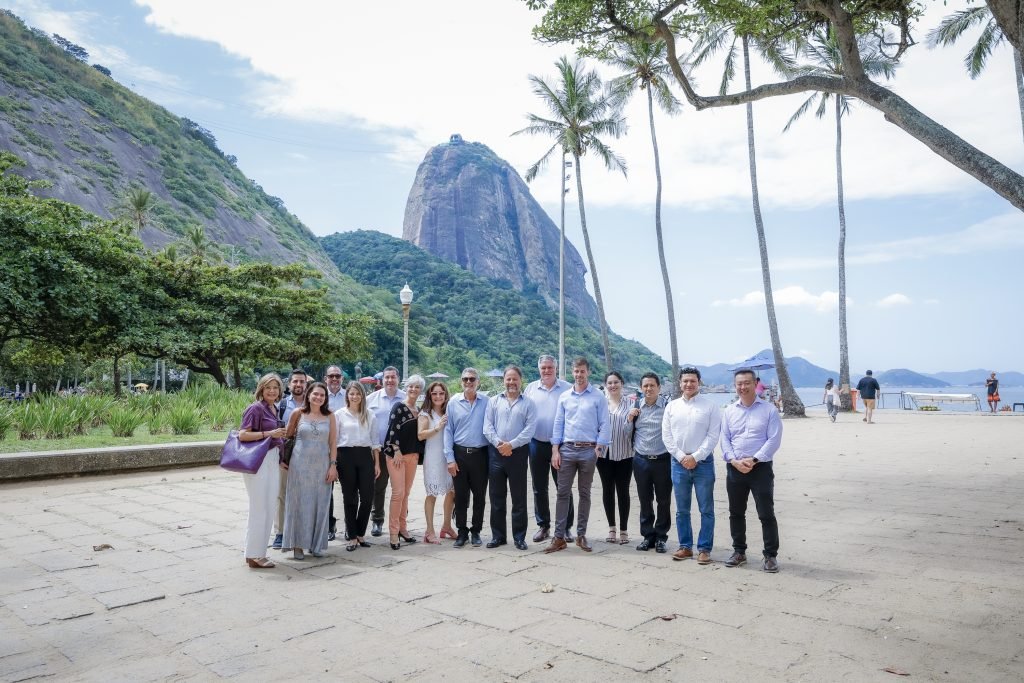
The Association of Latin American Electric Power Distributors (ADELAT) held a meeting with representatives of member companies, strategic partners and specialists from the Latin American electricity sector last April 2nd and 3rd in Rio de Janeiro, Brazil.

The objective of these sessions was to share experiences, discuss key issues for the sector, and strengthen regional cooperation in the area of ​​electricity distribution. The agenda included company visits, presentations by specialists, and exchanges that enriched our vision and strengthened ADELAT’s growth prospects for the future.

On the first day, we visited Enel Rio de Janeiro’s operations center, where more than 60 substations and 20,000 kilometers of grid are monitored in real time. Lindemberg Reis, Market Planning and Intelligence Manager at the Brazilian Association of Electric Power Distributors (ABRADEE), presented an innovative Regulatory Sandbox project. S&C Electric Company, GME Global, and our partner EEGSA – EPM Guatemala also gave presentations.

Finally, we toured the Energy Research Company (EPE), where we learned about its planning model based on the projection of a 50% renewable thermal matrix by 2035. We also attended the presentation of the supply bidding process that is about to begin in Guatemala by EEGSA and Energuate.

On the second day, we toured the Federal University of Rio de Janeiro with the Gesel Institute. The professor Nivalde de Castro presented the new regulatory scenario simulation platform, which incorporates artificial intelligence and prospective analysis to support distributors on the path toward energy transition.

Meanwhile, Katia Rocha, senior researcher at the Institute for Applied Economic Research (IPEA), offered her perspective on the challenges facing countries in the region regarding remuneration and necessary investments.

We also visited the headquarters of our partner, Neoenergia, where we discussed the challenges of regulation, analyzed our Association’s 2025 strategy, and debated the role of advocacy in advancing the most pressing issues in the electricity sector.

We would like to thank the companies and organizations that hosted us and all the participants who were part of our delegation. These were two intense days, full of learning and new ideas to put into practice with the ultimate goal of achieving a true, fair, resilient, and sustainable energy transition for the entire region.


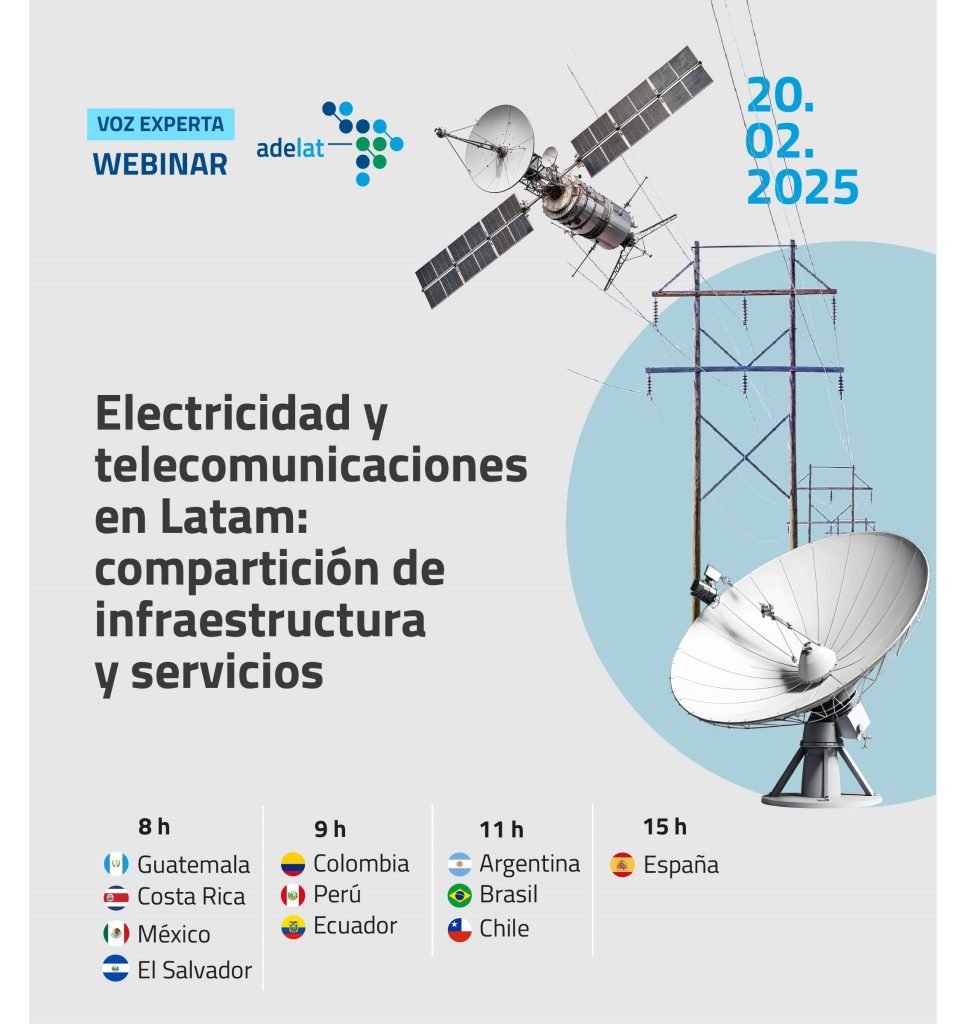
ADELAT held the Webinar “Electricity and Telecommunications in LATAM: sharing of infrastructure and services”

ADELAT held the Webinar “Electricity and Telecommunications in LATAM: sharing of infrastructure and services”

The Association of Latin American Electricity Distributors led the first meeting of the year of the ADELAT Expert Voice cycle, which was the analysis of the benefits and challenges of sharing the infrastructure between the electricity and telecommunications companies of the region.  

The opening was in charge of the Executive Director of the Association, Alessandra Amaral. Afterwards, the Director of Knowledge Management, Roberto Cajamarca, presented the main conclusions of the last DSO Brief “New synergies between electricity and telecommunications”.

Cajamarca highlighted the role of energy as an enabler of connectivity and the importance of telecommunications companies to make the digitalization of electrical networks possible. In this regard, he detailed that “5G technology and optical fiber are fundamental for the modernization of electrical distribution systems, as they allow the deployment of smart grids, intelligent measurement and demand management”.

He also addressed the main challenges to enable infrastructure sharing, such as regulatory fragmentation, insufficient remuneration for shared use and the proliferation of telecommunications operators, among others. Subsequently, he reviewed the current situation of five countries in the region and cited successful cases implemented in Italy, Ireland and Japan.

Then, Amaral introduced the invited experts. The first speaker was Carlos Alberto Calixto Mattar, Director of the Electricity Working Group of ARIAE and Regulation Superintendent of Distribution Services of ANEEL. Throughout his exposition, Mattar went deeper into the Brazilian regulatory context. In this regard, he assured: “We have a regularization plan that foresees a series of rules, which was presented to public consultation in 2021 and which is still not properly closed with the telecommunications companies”.

On the other hand, he pointed out that the main challenges are the disorganized and clandestine occupation, the low priority of activities related to shared use by distributors, the increase in costs and the imbalance in the relationship between distributors and telecommunications companies.

Next, Alejandra Arenas Pinto shared her experience as Regulatory Design Coordinator of the Communications Regulatory Commission (CRC) of Colombia. She highlighted as a milestone the sanction of a law in 2019 that gave competence to the CRC in matters of regulation on shared use of infrastructure. She detailed that subsequent resolutions lowered tariffs for the common use of posts, ducts and towers with the aim of encouraging the increase in cabling groups and facilitating coverage amplification.

“We used the opportunity cost concept to establish what the value should be so that the telecommunications operator finds it economically reasonable to share the infrastructure”, she detailed. However, among the rights that persist, she ensured that “the electric energy sector continues feeling that regulation favors telecommunications” and that it is necessary to analyze mechanisms so that shared use becomes reciprocal and that, in this way, the electric sector can also access the telecommunications infrastructure.

Thereafter, Alberto Villa, Head of Grids Advanced Services at ENEL, explained his vision about the benefits of sharing resources. “Using the existing infrastructure allows us to obtain a significant saving in construction costs and commissioning time, and provides a benefit not only in economic terms but also from an environmental and sustainability point of view”, he assured.

He commented that, in Europe, large antenna towers are installed in electrical substations and 5G antennas on posts and other elements of the electrical grid. Furthermore, he assured that in Italy they are looking for sustainable and synergistic developments to use electric vehicle charging stations. “The objective is to guarantee efficient, effective, equitable and sustainable development”, he concluded.

Finally, Atila Branco, CTIO of Fibrasil, ensured that neutral fiber is the simplest and easiest way adopted by many brazilian wideband distributors. He stated that this alternative has a large market but must be consolidated; and that it is necessary to regularize the situation and establish healthy prices that represent mutual benefit.

To conclude, an exchange space was opened where assistants had the opportunity to ask questions to experts. 

We thank all the attendees for being part of this meeting, which we trust will be the first of many ones that we will share throughout 2025 with the objective of continuing to build knowledge that allows us to go forward into an effective and sustainable energy transition.


*For more information or press releases, write to comunicacion@darkturquoise-zebra-776384.hostingersite.com


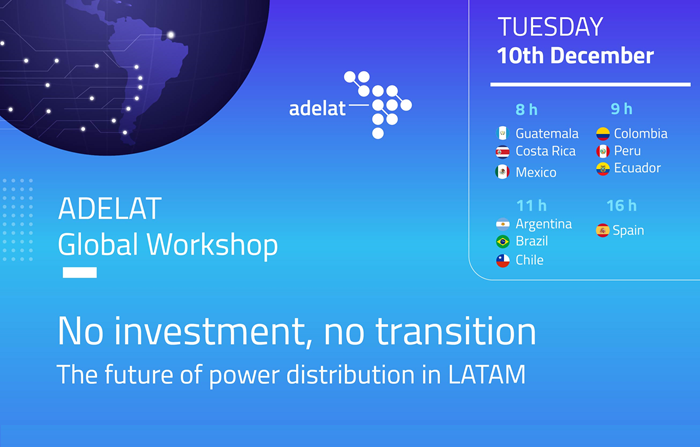
ADELAT carried out a Global Workshop about the need of investments in power distribution for the energy transition

ADELAT carried out a Global Workshop about the need of investments in power distribution for the energy transition

The Association of Latin American Electrical Energy Distributors (ADELAT) held a Workshop in which experts from the International Renewable Energy Agency (IRENA) and the International Energy Agency (IEA) shared their perspectives on the need to accelerate the investments for the energy transition in the power distribution networks of Latin America.

The president of ADELAT, Aldo Pessanha, welcomed the meeting and gave a summary of the history of the Association and its work to enhance the role of distributors and facilitate the energy transition of the region.

Then, the executive director, Alessandra Amaral, explained ADELAT’s role as a knowledge generator and introduced the topic of debate. Next she gave the floor to the Knowledge Management Director, Roberto Cajamarca, who presented the conclusions of the Policy Paper published by the Association, called “No investment, no transition. The future of electricity distribution in Latin America”, whose results reveal that additional investments of up to US$ 289 billion will be required for distributors in 7 countries analyzed, until the year 2040.

Next, Amaral took the floor again to introduce the two invited experts: Ricardo Gorini (Head of REmap at IRENA) and Pablo Hevia-Koch (Head of Renewable Integration and secure electricity at IEA).

Gorini referred to the studies published by IRENA in relation to energy transformation and the need for investments at a global level to improve distribution systems. He also emphasized the role of banks, regulators and planners to make financing viable and thus generate less impact on tariffs. “Society’s payment capacity is limited, so we have to see how to compensate for this process in a structured and planned way,” he stated.

Hevia-Koch, on the other hand, emphasized that the nature of electricity systems is changing and that investment in distribution is critical, for both emerging and advanced economies. “In the last five years, investment in networks worldwide has been stagnant,” he said, and warned that if the investments do not materialize, the growth of renewable energies will be slowed and dependence on fossil fuels will further increase.

After the presentations, an interactive debate took place, in which participants answered questions, voted between different options and asked their own questions to the panelists.

We thank all attendees for their active participation and we trust that this event contributed to promoting dialogue and knowledge on such an important topic for the effective energy transformation of Latin America.


*For more information or press releases, write to comunicacion@darkturquoise-zebra-776384.hostingersite.com


ADELAT launches webinar on digitization and automation in power distribution

ADELAT launches webinar on digitization and automation in power distribution

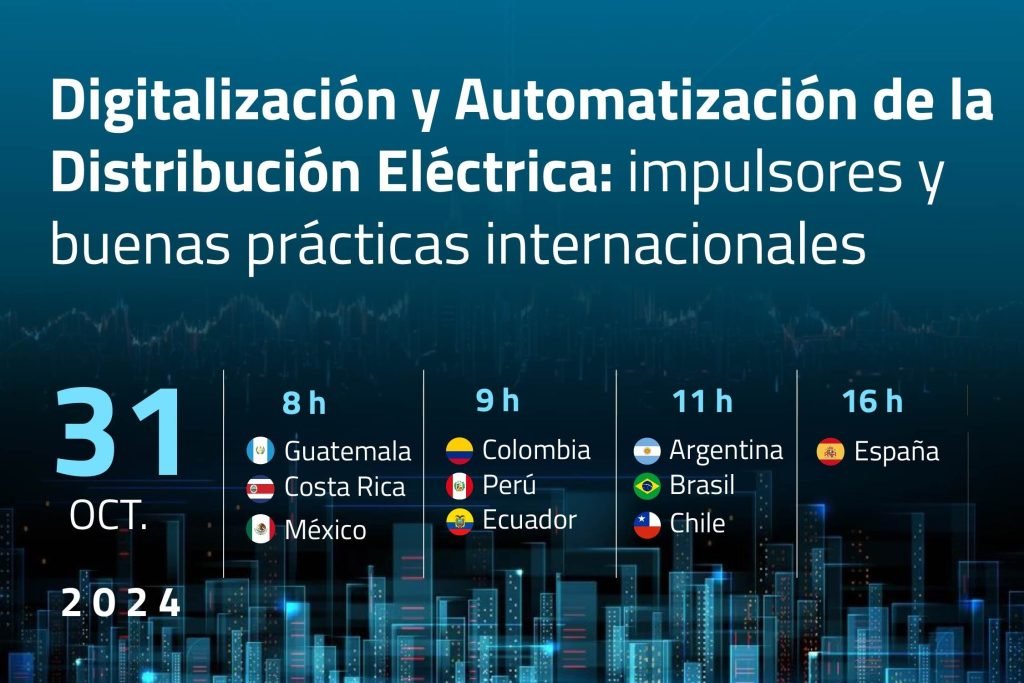
Next October 31st, a new edition of Expert Voice Adelaticycle will be carried out via Zoom and LinkedIn Live: “Digitization and automation of power distribution. Drivers and good international practices”. This event requires prior registration and will have simultaneous translation into Spanish and Portuguese.

During the meeting, we will present the main conclusions of our last DSO Brief, with a focus on the role of digitization and automation as tools that are transforming the way in which power infrastructure is managed globally and how they can contribute to improve resilience, efficiency and sustainability of LATAM distribution systems.

The increase in power demand, together with the growing consumers’ expectations for a more efficient, sustainable and personalized service, highlight the imperative need to modernize the region’s distribution networks.

We will analyze global trends in the implementation of new technologies (IT/OT systems, GIS, AMI, Sensory, Big Data, AI and machine learning, among others). In addition, experts will discuss concrete actions for governments and regulatory agencies to promote the implementation of digitization and automation of electrical distribution.

The event will also include the presentation of good practices and international success stories in the implementation of digital technologies and their possible adaptation to the region, considering local existing infrastructure, technological capabilities, and socioeconomic conditions.

We trust that this meeting will be a valuable opportunity to exchange knowledge and experiences and thus contribute to the analysis of key issues to advance in the region’s power transformation process.


*For more information or press releases, write to comunicacion@darkturquoise-zebra-776384.hostingersite.com

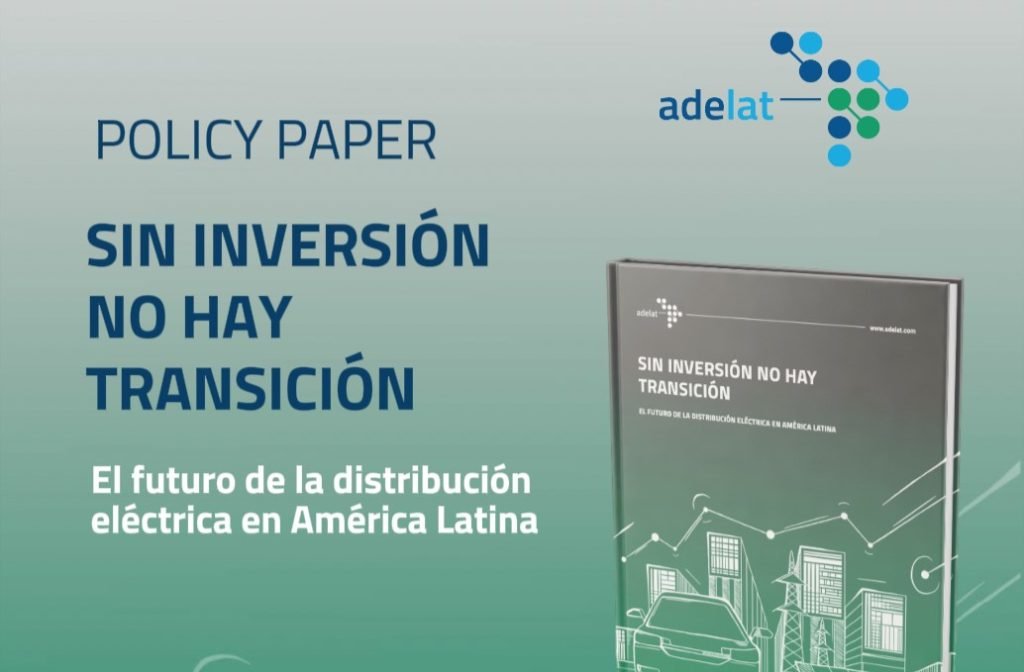
ADELAT presents a study on the necessary investments in power distribution for the energy transition in Latin America

ADELAT presents a study on the necessary investments in power distribution for the energy transition in Latin America

The Association of Latin American Electrical Energy Distributors (ADELAT) launched the policy paper “No investment, no transition: the future of power distribution in Latin America”, which analyzes the investment needs in Argentina, Brazil, Chile, Colombia, Ecuador, Guatemala and Peru to advance an effective energy transformation.

This study identifies eleven vectors that are fundamental for the energy transition such as Electrification of New Uses, Electromobility, Connection to Distributed Generation, Digitalization and Automation, AMI (Advanced Metering Infrastructure), Service Quality, Resilience, Network Upgrade, Batteries , Loss Normalization and Universalization. These trends represent an opportunity to meet climate commitments and improve the life quality in the analyzed countries.

The analysis was commissioned to the consulting firm Grupo Mercados Energéticos, with data provided by the associated distribution companies, a detailed characterization of the current situation in each country and energy demand projections. In this way, two possible transition scenarios were established for the year 2040: one of Effective Energy Transition (compatible with the objectives established in “Connecting the Dots”, a study developed by Deloitte for Eurelectric), and another of Partial Energy Transition.

The results reveal that the first case requires an investment of US$ 289 billion additional to what would occur if the recent trend continued (US$ 143 billion), making a total of US$ 431 billion for the distributors of the 7 analyzed countries, in a time window of 17 years. For the second case, the additional investments are US$ 174 billion which, added to the US$ 133 billion of a trend, make a total of US$ 307 billion.

The paper also highlights the operational, economic, social and environmental benefits of these investments, including reductions in operating costs, which will be quantified in a second stage of the work, and the improvement of the energy services quality in the region.

In this context, ADELAT made an online presentation of the main findings, in which prominent professionals from the sector participated. The Head of the Electrical Department of the National Energy Commission of Chile, Danilo Zurita, stated: “We must modify our distribution regulatory framework to provide certainty and benefits to all those involved, recognizing the local realities of each company and incorporating new technologies”.

The director of ARIAE Electricity Working Group and Superintendent of Regulation of Distribution Services of ANEEL (Brazil), Carlos Alberto Calixto Mattar, agreed that the current model requires a review. “There is no possibility of having an energy transition if there is no investment in transmission and distribution networks,” he concluded.

The advisor of the Executive Secretary at OLADE, Medardo Cadena, said that achieving the goal of zero emissions by 2050 requires increasing the participation of electricity in the energy matrix. He specified that one of the great challenges is to guarantee that the impact of this transition is minimal for the end user, so that “the end user really feels a positive effect on the total energy bill of this entire process that we are experiencing.”

The Energy Specialist of the Inter-American Development Bank (IDB), Augusto Bonzi, added: “Whenever we think about investments and infrastructure, we must also consider employment and gender equality, to ensure that the energy transition is also sustainable”.

This meeting was part of the “ADELAT Expert Voice” Cycle which, like other initiatives of the association, seeks to promote the construction of a common language that allows regulators, distribution companies, governments and civil society to understand and effectively communicate  the essential aspects of distribution activity in the context of the energy transition.


Download the full study or its summary in your preferred language:

Spanish: https://bit.ly/Paper_Inversiones / https://bit.ly/Resumen_Inversiones

Portuguese: https://bit.ly/Paper_Investimentos / https://bit.ly/Resumo_Investimentos


*For more information or press releases, write to comunicacion@darkturquoise-zebra-776384.hostingersite.com 


About ADELAT

The Association of Latin American Electrical Energy Distributors is a non-profit organization, created at the end of 2021. It aims to be a reference in electrical distribution activity with the objective of promoting and accompanying the transformation process of Latin American electrical distribution in the framework of the energy transition.

ADELAT adds Costa Rica with the incorporation of ICE

ADELAT adds Costa Rica with the incorporation of ICE

We are proud to announce a new step in our regional growth with the integration of the Instituto Costarricense de Electricidad (ICE) to the list of associates.

This incorporation expands ADELAT’s reach to foster an environment of collaboration and promote strategies to enhance the role of Distribution System Operators (“DSOs”) as enablers of the energy transition.

The ICE was founded on April 8, 1949, through Law No. 449, with the objective of promoting the electrification of Costa Rica. Since its creation, electricity service coverage has increased from 14% to 99.4% of the country’s population.

The Institute is the largest electrical company in Costa Rica and, in addition to distributing energy, it manages the National Electric System (SEN), it is the country’s main generator and it is in charge of transmission. For 75 years, ICE has promoted the Costa Rican electricity matrix, recognized in the world for its high percentage of renewability and its diversity. It meets demand using five clean resources: water, geothermal, wind, biomass and sun.

As a distributor, ICE provides an annual average of 4,566 GWh in its concession area (covering 71% of the Costa Rican territory). In addition, it promotes the development of smart networks and electric mobility.

Since 2023, the Institute has promoted a new rural electrification program, which will provide the service for the first time to 2,670 homes, with an investment of more than ₡23,000 million (about $43.5 million), with the medium-term goal of converting Costa Rica is the first American country with 100% coverage.

The head of the Distribution and Marketing Division of ICE, Ángelo Vargas Hernández, celebrated the incorporation to our Association and commented on the company’s expectations: “We trust that joining ADELAT will allow us to actively participate in the construction of proposals that increase the competitiveness of our country and the region, learn but also contribute from our experience on how to develop strategies that promote the role of electricity distributors.”

The president of ADELAT, Aldo Pessanha, expressed that “having new actors in the sector is very valuable, since they contribute to the integration process of the region, the strengthening of the generation of knowledge and the development of new technologies.”

The growth of the Association will enhance information exchanges in various technical and administrative areas, which will result in improvements in service provision and a deep modernization of electrical distribution.

In this way, ADELAT is made up of 19 electrical distribution companies and associations that are present in 8 countries: Argentina, Brazil, Chile, Colombia, Costa Rica, Ecuador, Guatemala and Peru.


*For more information or press releases, write to comunicacion@darkturquoise-zebra-776384.hostingersite.com

About ADELAT

The Association of Latin American Electrical Energy Distributors is a non-profit organization, created at the end of 2021. It aims to be a reference in electrical distribution activity with the objective of promoting and accompanying the transformation process of Latin American electrical distribution in the framework of the energy transition.


About ICE

The Instituto Costarricense de Electricidad (ICE) was created in 1949. It is the most important electrical company in the country; It covers 71% of the national territory with its distribution service and manages the National Electric System (SEN), whose matrix positioned Costa Rica as a world leader in renewable generation.